

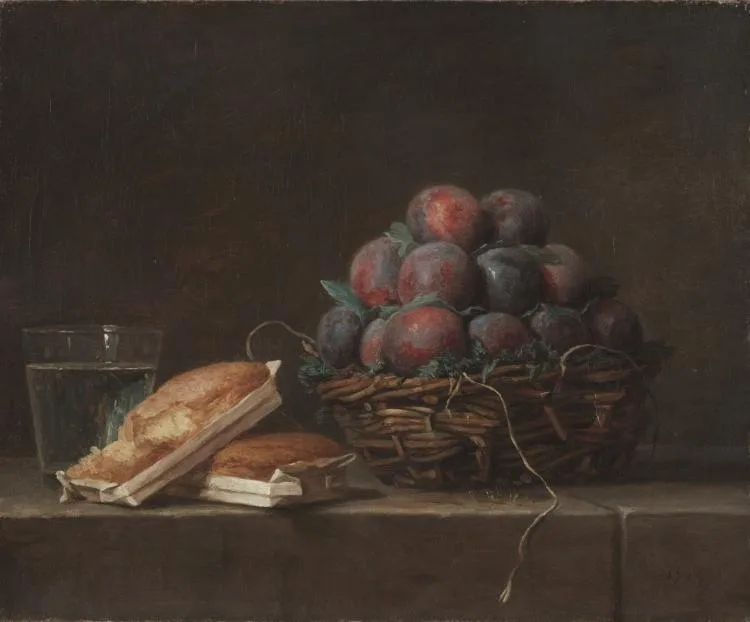
Painters keep going back to the same short list of subjects. A table with objects on it, a person in a room, a window with light coming through it: these arrangements have been in use for four hundred years and they are still in use in studios this week. What changes is the job the painter gives the arrangement, and that is where a reinterpretation separates itself from a straight copy of an older picture.
The pull is practical before it is historical. A classical genre arrives with a solved structure, so a painter who takes one up inherits several centuries of decisions about where to put things and how to light them. That frees attention for whatever the painter actually wants to argue about, which is usually something the original structure was never built to say.
What survives the transfer
The elements that carry over are structural. Compressed space, a single light source, objects at arms length, a scale that fits a domestic wall: these hold up because they solve real problems about how a picture gets read. What falls away is the symbolic apparatus. A seventeenth century skull on a table meant one specific thing to a viewer who saw it every Sunday, and it means something much vaguer now.
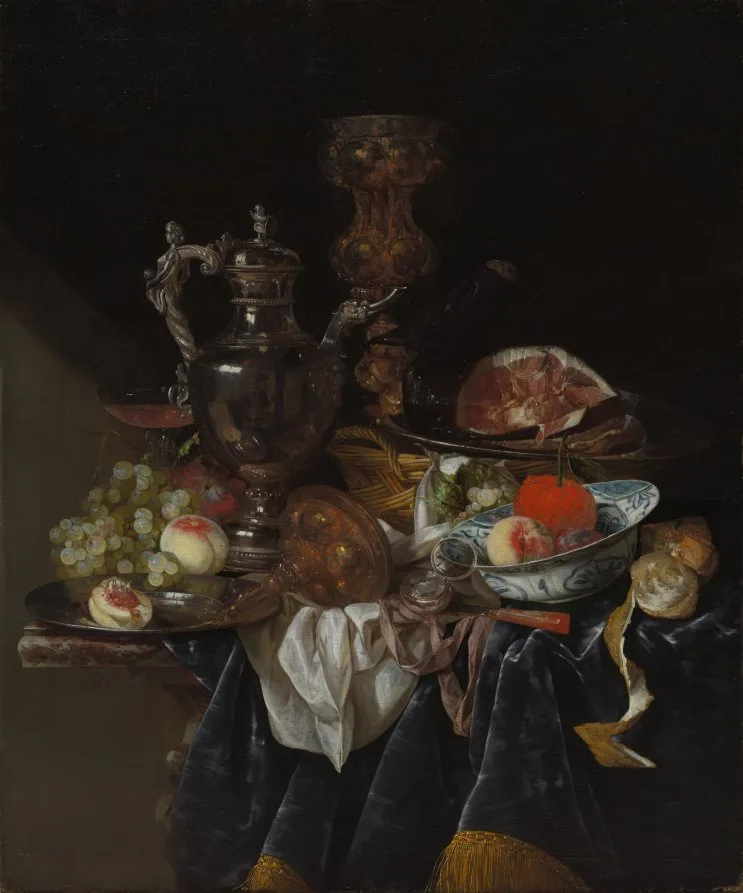
Contemporary still life shows the shift clearly. The objects have changed to packaging, cables, medication, takeaway containers and phones, and the change is not decoration. Painting a plastic bottle with the attention Kalf gave to a silver jug is an argument about what deserves that attention now. The structure is borrowed and the claim is new.
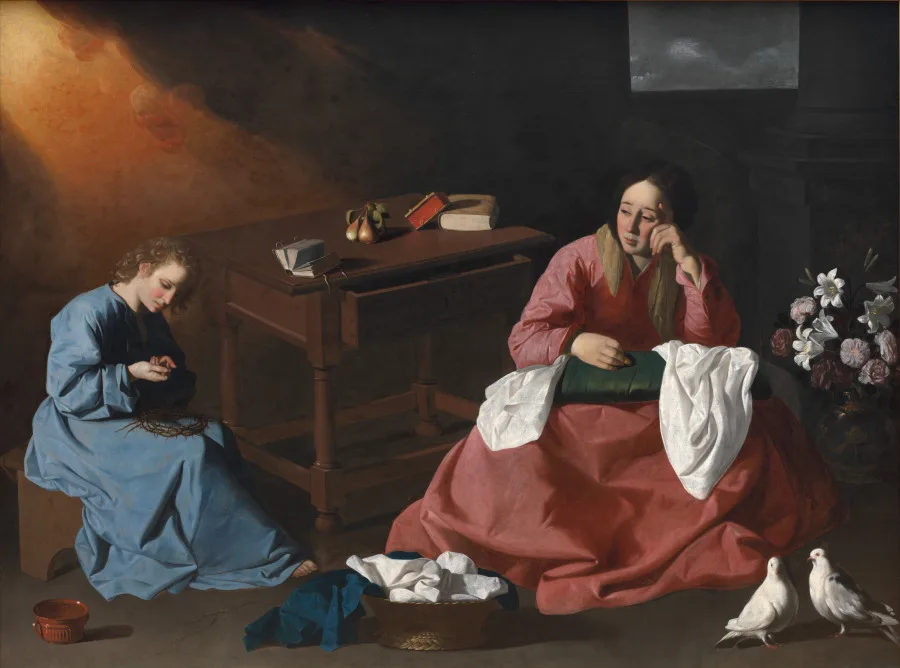
Portraiture has moved in a similar direction. The classical portrait announced status through clothing, setting and posture, and every viewer knew the code. Painters working now keep the frontal pose and the controlled light while removing the status signals, which leaves a picture about attention itself rather than about rank. The genre survives because the format is strong, and the format was always the part doing the work.
- A borrowed structure used to say something the original structure could not
- Objects from the present treated with the care once reserved for luxury goods
- Light that comes from a screen or a fluorescent tube rather than from a window
- Scale pushed well past life size, which no classical genre ever permitted
- A finish that quotes older method without pretending the last century did not happen
Those markers separate a reinterpretation from a pastiche, and the distinction is worth money. Pastiche reproduces the surface of an older genre and stops there, which is a legitimate decorative trade and prices accordingly. Reinterpretation uses the genre as a working structure, and the market treats the two very differently once a painter has an exhibition history behind them.
Telling a rework from a pastiche
Ask what the picture would lose if the historical reference disappeared. If the answer is everything, you are looking at pastiche, because the painting depends on the viewer recognizing a source. If the answer is one layer of meaning while the picture still stands on its own composition and handling, then the reference is doing proper work. That test is quick and it survives contact with sales talk.
A genre is a container. Every generation that keeps using one has decided the container is better than anything it could build from scratch.
Editorial note, Beautiful Art
For collectors this area sits in a useful spot. Work that reads as traditional across a room and contemporary up close tends to be underpriced against work that announces itself as one or the other, because it does not fit either sales pitch cleanly. That gap has stayed open for a while now, and it rewards buyers who are willing to look at the picture rather than at the category it gets filed under.
