

The 1905 Salon d'Automne opened at the Grand Palais in October and included retrospective rooms for Ingres and Manet. Almost nobody remembers those now. What survives is room seven, where canvases by Henri Matisse, Andre Derain, Maurice de Vlaminck, Albert Marquet, Henri Manguin and Kees van Dongen hung together in high unbroken colour. A small Renaissance style bronze bust by the sculptor Albert Marque stood in the middle of the room.
The critic Louis Vauxcelles saw the bust surrounded by the paintings and wrote a line about Donatello among the wild beasts. The phrase ran in Gil Blas and was picked up everywhere within a week. It was meant as mockery and it worked as branding. Nobody in that room had used the word fauve about themselves before the review appeared.
Why a hostile name is better than no name
A market needs a label before it can price anything. Without one, six painters are six separate problems for a dealer, each requiring its own explanation to each client. With one, they are a group, and a group can be written about, catalogued, compared and collected. The hostility of the label made no practical difference, because within two seasons the word had lost its sting and kept its usefulness.
Buyers appeared quickly. Leo and Gertrude Stein bought Matisse's Woman with a Hat out of that salon, which mattered more than the purchase price, because the Steins showed their pictures on Saturday evenings to everyone passing through Paris. A canvas hanging in an apartment that half the art world visits does more work than a canvas in storage. Their wall became a second exhibition venue with no rent.
The dealers moved next. Ambroise Vollard bought studio contents from Derain and Vlaminck in the following months, which is the clearest signal a dealer can send about where he thinks prices are going. Buying a whole studio removes supply from the market and gives the buyer control of the release schedule. That is a market technique rather than a matter of taste, and it had been standard practice in Paris for thirty years.
- A single critical phrase gave six painters one searchable name within a week
- The Steins bought from the room and then showed the pictures to a stream of visitors for free
- Dealers bought studio contents, which controls supply and sets the pace of later sales
- The retrospectives in the same building gave critics a direct comparison to argue about
- Group identity made the work easier to catalogue, which auction houses need before they can price it
- The label survived the group itself, and is still used to sell work made after the painters had scattered
The group did not last. By 1908 Derain and Braque were working toward something harder edged, Matisse had moved on again, and the shared palette had stopped being a shared position. What lasted was the word. Fauve remains a price bracket in auction catalogues, and canvases made during those few seasons carry a premium over work by the same painters from either side of them.
Scandal as a market instrument
There is a pattern worth naming here. Scandal creates attention, attention creates a label, and the label creates a category that can be traded. The step people miss is the last one, since outrage on its own decays within a season. It only turns into money when someone attaches a name to it that a cataloguer can use twenty years later.
Donatello au milieu des fauves. Donatello among the wild beasts.
Louis Vauxcelles, Gil Blas, October 1905
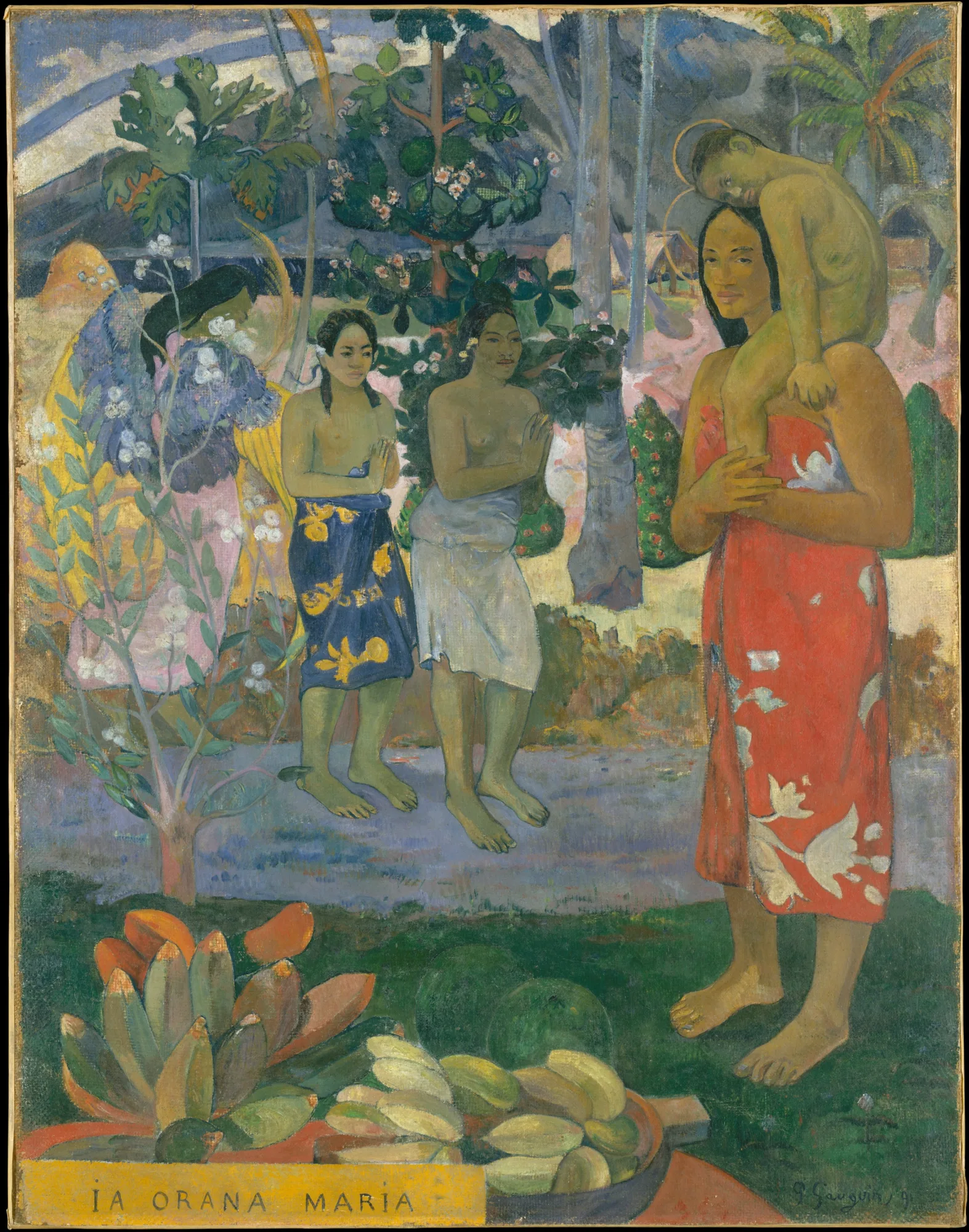
Gauguin sits behind that room, and the debt is visible in the flat colour and the refusal of modelling. The Metropolitan Museum of Art holds his Ia Orana Maria of 1891, which shows the source clearly enough. Comparable holdings are listed in the museum collection for anyone tracing how the palette arrived in Paris.
