

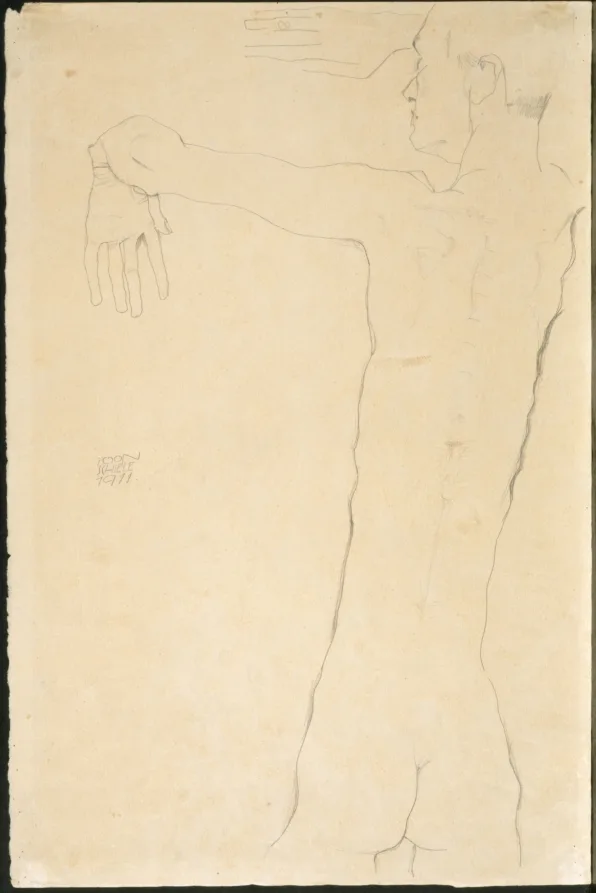
In April 1897 a group of artists resigned from the Kunstlerhaus, the association that had controlled exhibition life in Vienna for decades, and founded their own body. Gustav Klimt was its first president. The grievance was practical rather than theoretical, because the Kunstlerhaus owned the hall, set the hanging and gave its senior members and their dealers the best walls. A quarrel about wall space turned into an institution.
What the group built next is the part worth studying. Within two years the Secession had a purpose-built hall, a journal, a fixed exhibition calendar and a house style that ran across posters, catalogues and interiors. Those are the assets of a small publishing and exhibition business. The pictures were the product, and everything else was distribution.
A building used as a trademark
Joseph Maria Olbrich designed the Secession Building, which opened in 1898 a short walk from the Karlsplatz. The gilded dome of laurel leaves earned it a nickname among Viennese who found it absurd, and the nickname did the advertising. A recognisable silhouette gave the group something the Kunstlerhaus never had, which was an image that reproduced well in a newspaper. The building itself became the mark of origin.
Inside, the group controlled presentation as tightly as membership. Works hung in a single row on plain walls with space around them, instead of the floor to ceiling salon packing that Vienna was used to. Interiors were rebuilt for individual shows, so the exhibition became a designed object rather than a rented room. That practice spread across Europe and is now simply how galleries hang.
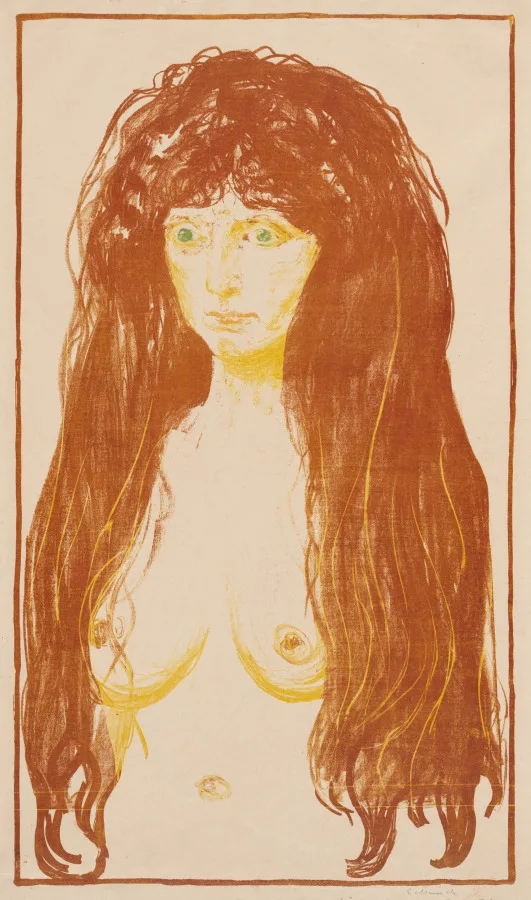
The invitation policy was the other lever. The Secession brought in foreign artists whose reputations were already made, among them Auguste Rodin, Max Klinger, Fernand Khnopff and the Glasgow group around Charles Rennie Mackintosh. Each visit lent the young association borrowed standing and gave Viennese buyers a reason to attend. Importing reputation is cheaper than building it.
- The association owned its hall, so no outside jury could shorten a show or move a picture
- Ver Sacrum gave members a printed channel that reached subscribers between exhibitions
- Foreign guests raised the standing of the group and drew a paying audience to Vienna
- A single graphic style across posters and catalogues made the output recognisable at a glance
- Exhibitions were designed as complete interiors, which sold the decorative work alongside the painting
- A fixed calendar of shows trained Viennese buyers to expect something new at a known point in the year
None of this made the group rich, and several members complained that the administrative load ate their studio time. It did change what a Viennese collector could buy and at what price. Work by Secession members moved out of the local circuit and into German and international shows, which is where prices are set. Reputation built at home tends to be capped by the size of the home market.
The Beethoven show and the split
The fourteenth exhibition, held in 1902, was the clearest demonstration of the method. The whole building was rebuilt around a sculpture of Beethoven by Max Klinger, with Klimt's Beethoven Frieze painted directly on the walls of a side room. Visitors moved through a designed sequence rather than a hang. In 1905 the Klimt group left the association after a dispute about commercial dealing and direction, which is the usual way such bodies end.
Der Zeit ihre Kunst, der Kunst ihre Freiheit. To every age its art, to art its freedom.
Inscription on the Secession Building, Vienna, 1898
The brand outlived the quarrel, which is the useful lesson. Buyers now use the word Secession as a period label attached to Vienna around 1900, and it carries a premium over the same objects described as Austrian decorative art. Museums with strong Austrian holdings, including the Cleveland Museum of Art, are the place to calibrate that before you pay it.
