

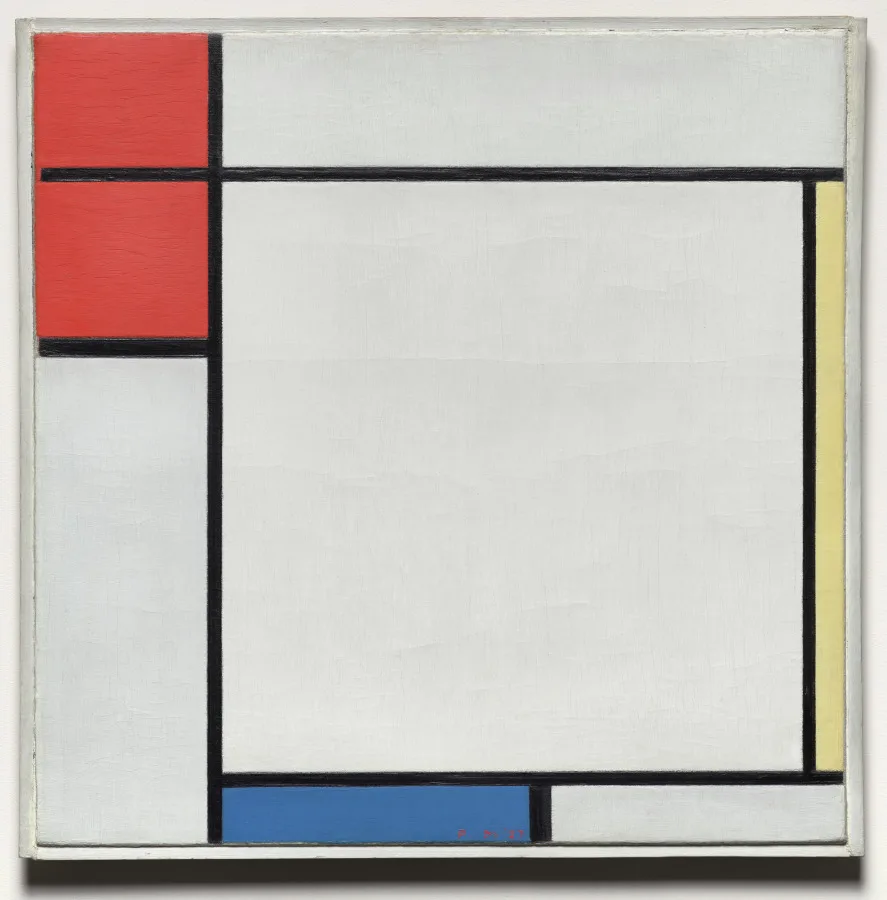
Abstract art stopped being a Western monopoly a long time ago, but the price map has not caught up. A painter trained in Tbilisi or Yerevan who has shown for twenty years and sits in two museum collections will still sell for a fraction of what a comparable career commands in London. The gap is a fact about distribution and reputation, not about the pictures. That is the whole argument for looking at these markets seriously.
The abstraction that developed outside the main Western centers rarely followed the New York timeline. In much of Eastern Europe and the former Soviet republics, non-objective painting was semi official at best for decades, which pushed it into apartments, studios and unofficial exhibitions. Painters kept working, and they kept a relationship with drawing and with local decorative traditions that most Western abstractionists had cut.
What the local schools actually look like
Georgian abstraction leans on color relationships and on a flat, almost enamel like surface that comes out of icon painting and cloisonne. Armenian painters kept a stronger tie to landscape structure, so the canvases often read as horizons that have lost their subject. Central Asian work sits closer to textile design in its rhythms, with repeated units that never quite repeat exactly. These are generalizations and every one of them has obvious exceptions, but they hold often enough to be useful in a viewing room.
The Balkan situation differs again. Yugoslav artists had far more contact with Western Europe than Soviet ones did, so abstraction there developed alongside its Paris and Milan equivalents rather than in isolation. Prices in Belgrade and Zagreb reflect that history, and they sit noticeably above comparable work from further east.
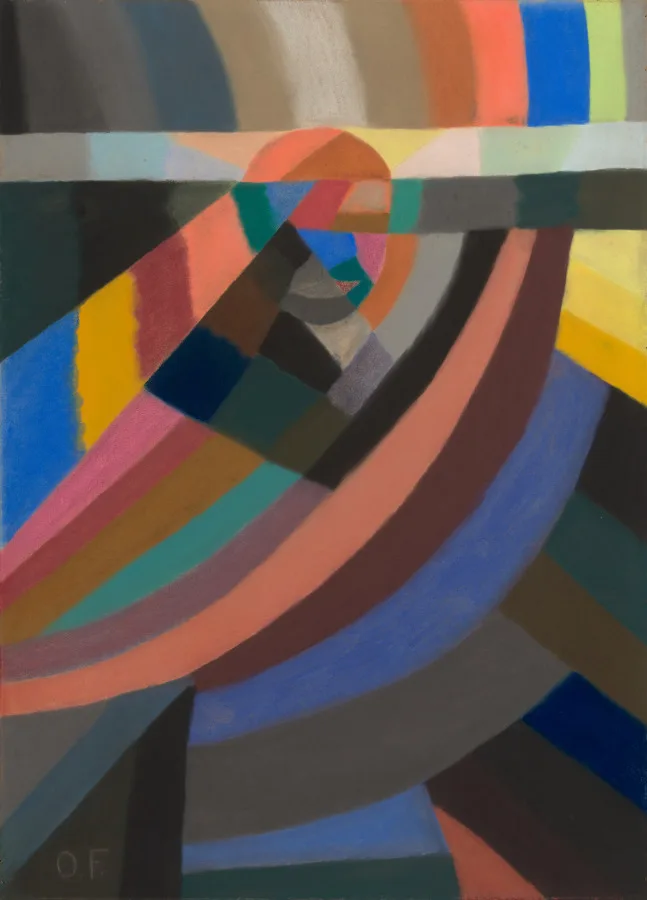
Provenance is the hard part. A painting made in a Soviet studio in 1974 usually has no gallery record, no exhibition catalogue and no invoice. What it has instead is the artist, the family, and sometimes a photograph of the studio wall. Buyers used to Western paper trails find this alarming, and they should, because the same conditions make forgery straightforward.
- Ask for photographs of the work in the studio or in the artist's home, dated if possible
- Check the stretcher and the tacking edge, since Soviet era materials are hard to fake convincingly
- Get the family or estate to confirm in writing when the artist is no longer living
- Compare the signature against at least three documented examples from the same decade
- Treat any story that depends on a single unverifiable middleman as a reason to walk away
None of that is exotic diligence. It is the same work a specialist would do on any picture with a thin record, and it takes an afternoon. The reason it matters more here is that the discount looks large enough to make buyers careless.
Currency matters more here than most buyers expect. Prices in Tbilisi, Yerevan and Almaty are quoted in local terms and set against local incomes, so a strong dollar quietly widens the discount you are already getting. It also means the seller may be working from a different frame of reference than you are, which is worth remembering before you push hard on a number.
Where the value is going
Institutional interest has moved first, as it usually does. Museums in Western Europe have been acquiring Eastern European abstraction steadily since the mid two thousands, and several large survey exhibitions have given the field a shared vocabulary it did not have before. Auction results follow institutional attention with a lag of roughly a decade. That lag is the window.
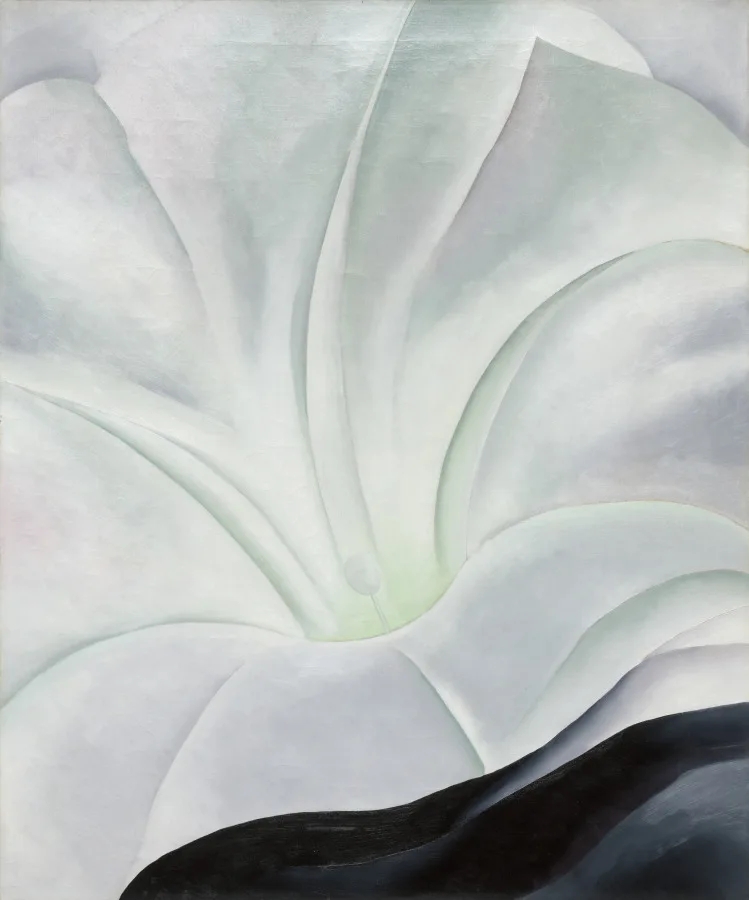
Color is the keyboard, the eyes are the hammers, the soul is the piano with many strings.
Wassily Kandinsky, painter
Kandinsky is the obvious ancestor for most of this work, and in the Caucasus and Central Asia the connection runs through actual teaching lineages rather than through books. Ask any serious painter in the region who taught their teacher and the answer usually reaches Moscow in the twenties within three steps.
