

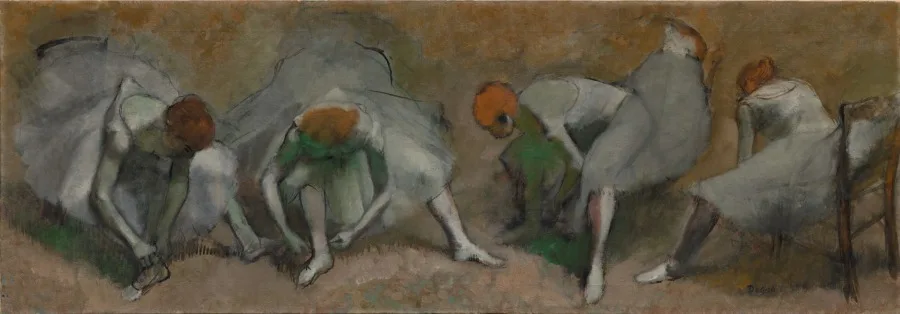
Figurative art is any art that keeps a recognizable link to the visible world, and in practice that usually means the human body. The term covers a Degas dancer, a Freud nude and a painted portrait made last month in Tbilisi. It exists mainly as the opposite of abstraction, which is why it only became a useful category after abstraction arrived. Before 1910 nobody needed a word for painting things that look like things.
That history explains why the label feels loose. A cubist portrait is figurative by strict definition, since a head is still there under the geometry. Most galleries use the word more narrowly, for work where the body reads clearly and the artist is interested in it as a body rather than as raw material for a composition. The strict definition survives in museum catalogues and almost nowhere else.
Why it never went away
Critics wrote the obituary several times. In the fifties, painting the figure looked like a retreat from what serious artists were doing in New York, and by the seventies photography had taken over the jobs that portraiture used to handle. The figure survived because it does something the alternatives cannot. A painted body carries the time it took to make, and viewers read that time as attention paid to a person.
The revival that started in the eighties never really stopped. Museums that had spent decades collecting abstraction began buying Freud, Auerbach and Bacon at serious prices, and art schools that had dropped life drawing quietly put it back. Younger painters now treat the figure as available material rather than as a position in an argument.
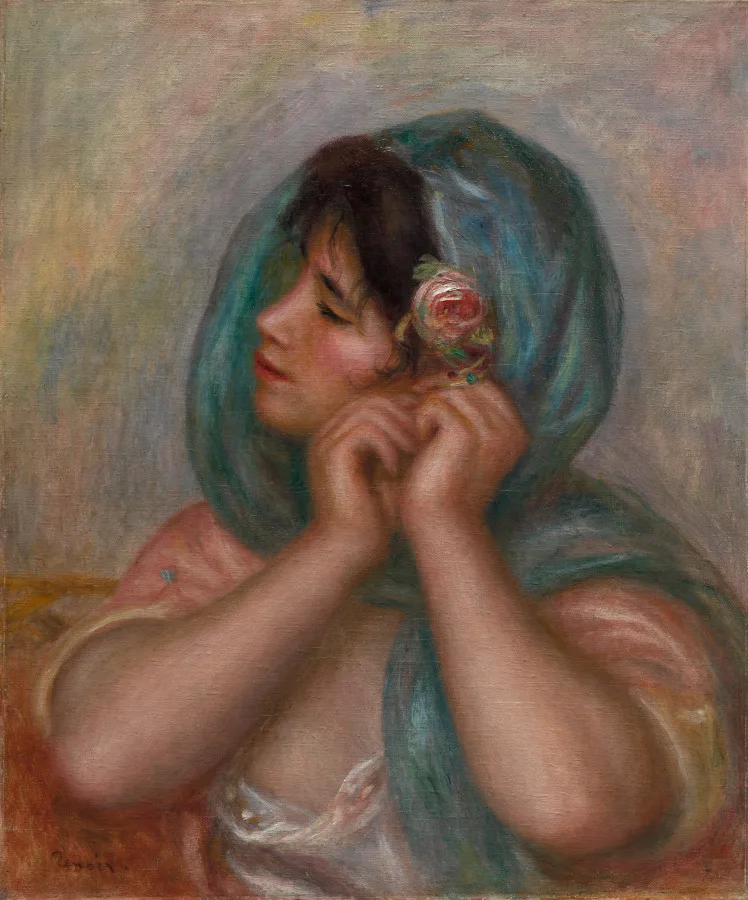
The word figurative also does practical work in the market. It groups painters who would otherwise sit in unrelated boxes, and it gives collectors a search term that returns something coherent. Auction houses use it in sale titles for exactly that reason, and the category has held its value better than most style labels of comparable age. Buyers who would never describe their taste as figurative still search for the word.
- Realism stays close to observed appearance and usually hides the process of making
- Expressionist figuration distorts the body to carry feeling and keeps the marks visible
- Narrative figuration builds a scene with several people and implies a story around it
- Portrait work answers to a sitter, which imposes limits the other approaches ignore
- Figurative abstraction keeps a body somewhere in the picture but refuses to describe it
Those five approaches share a room comfortably, and many painters move between them across a career. Bacon began with recognizable rooms and ended with figures that barely hold together. The movement usually runs from description toward distortion rather than the other way around, which is worth knowing when you look at an artist chronologically. An early canvas that already looks distorted is usually a sign the painter skipped the descriptive stage rather than passed through it.
Scale is the other thing to check before you commit. A figure painted life size asks for wall space and a viewing distance most apartments cannot give it, and dealers rarely raise the issue. Smaller canvases by the same artist often carry the work better in a room, and they trade more easily when you decide to move them on.
Where the money sits
The top of the figurative market belongs to a small group of postwar names, with Freud and Bacon setting the ceiling. Below that sits a wide middle where prices track exhibition history more than technique. The interesting activity is at the bottom edge, among painters from Eastern Europe, the Caucasus and Central Asia whose training was rigorous and whose prices still reflect the local market rather than the international one.
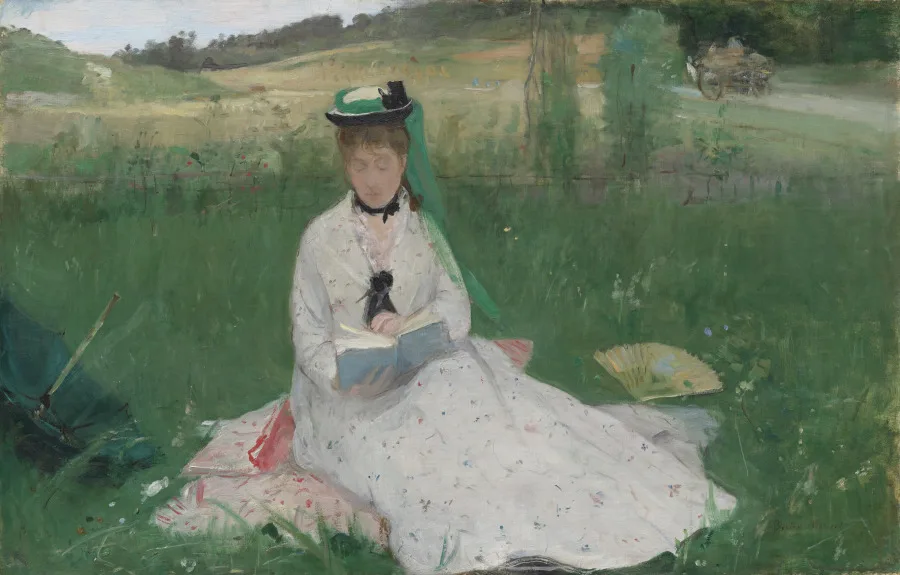
The task of the artist is to make the human being uncomfortable.
Lucian Freud, painter
For a first purchase, buy the drawing before the painting. Figurative drawing exposes what an artist can actually do with a body, it costs a fraction of a canvas, and it is the part of a practice that dealers price least confidently. A studio full of good drawings and weak paintings is a common pattern, and it tells you something about where the artist is going.
