

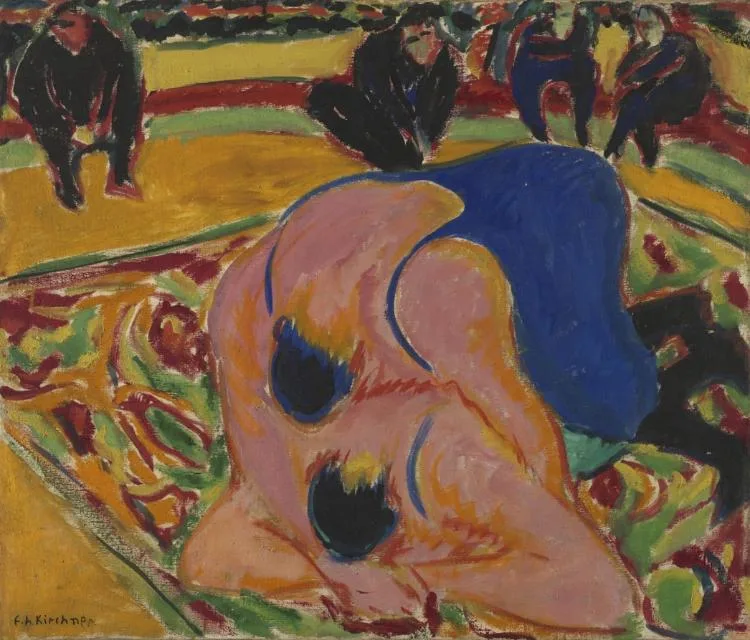
Expressionism began as a German argument about whether painting should describe the world or react to it. The painters of Die Brucke and Der Blaue Reiter chose reaction, and they built a vocabulary of harsh color, compressed space and visible violence in the handling. That vocabulary turned out to be portable. It has been picked up and put down by painters in every decade since, which is why the word still appears in gallery texts written this year.
Contemporary usage is looser than the historical term. When a dealer calls a painting expressionist now, they usually mean the marks are fast and the color is pushed, without claiming any link to Dresden in 1905. That looseness annoys historians and it is unlikely to change, so the practical move is to ask which expressionism is meant.
The revival that stuck
The neo-expressionist wave of the late seventies and eighties is the reason the style is still commercially alive. Baselitz, Kiefer, Immendorff and Lupertz in Germany, Schnabel and Salle in New York, the Transavanguardia painters in Italy: they arrived when conceptual work dominated the discourse and painting was widely described as finished. They sold enormously, the critical backlash was severe, and thirty years later most of the major names are in permanent collections anyway.
What that generation took from the original movement was permission rather than method. They kept the scale of gesture and the willingness to look crude, and they dropped the political program that had driven the Germans before the First World War. The result reads as expressionist at a distance and as something else entirely up close.
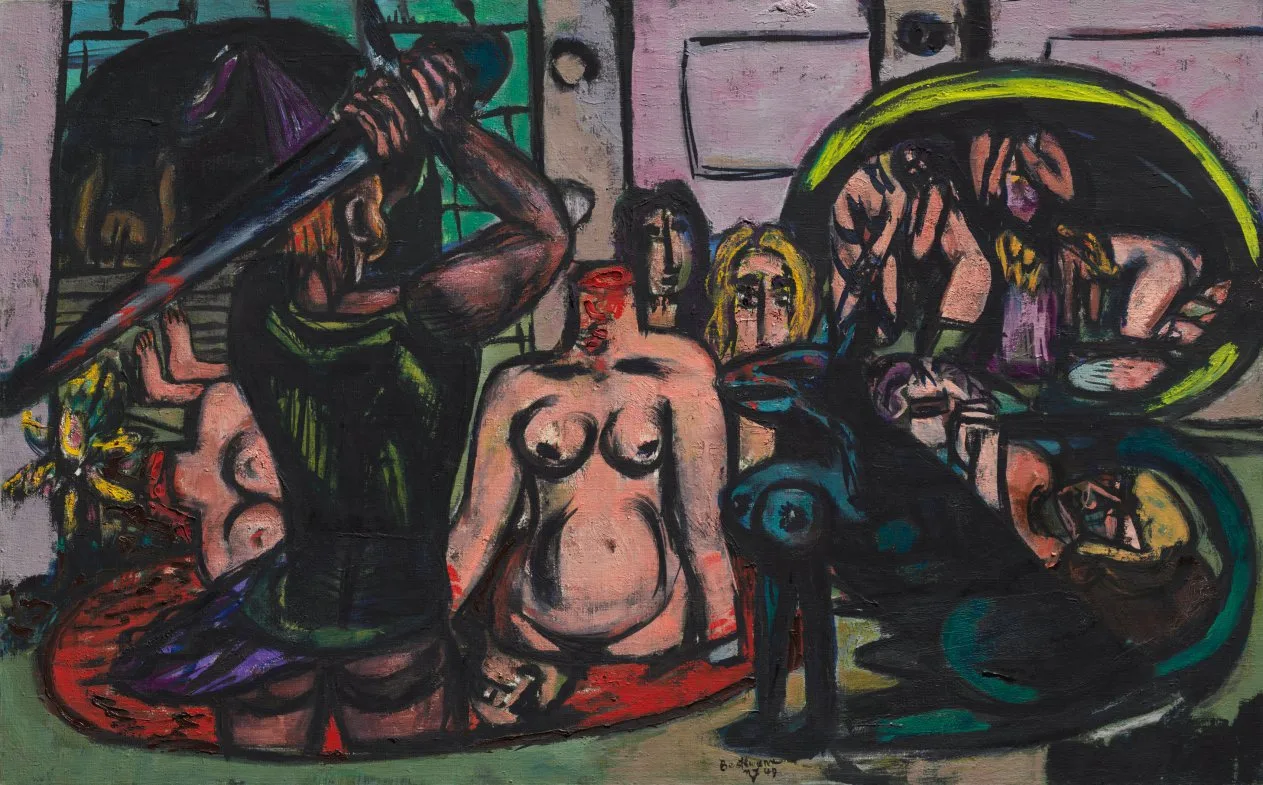
The German original had a specific relationship to printmaking that the revival mostly ignored. Woodcut suited the movement because the material fights back, and the resistance shows in every line. Kirchner, Heckel and Nolde produced graphic work that is often stronger than their painting, and it remains the affordable entry point into the period for collectors.
- Look at whether the speed is real or simulated, because a fast mark made slowly has a different edge
- Check the color for a single unexpected note, since good expressionist painting usually has one
- See how the figure meets the ground, as that junction is where weak work falls apart
- Prints from the German movement remain reachable in price while the paintings do not
- Condition on heavily impastoed canvases matters more than usual, so inspect the ridges under light
Reading the work this way avoids the main trap, which is treating emotional intensity as the criterion. Intensity is easy to fake and hard to sustain. The paintings from this tradition that survive are the ones with a structure holding the intensity in place, and that structure is visible if you look for it.
Framing decisions carry real weight with this material. Heavy gilt mouldings fight the roughness the painter worked for, and most galleries now default to a plain hardwood strip or a float frame that leaves the tacking edge visible. If a canvas arrives in a frame borrowed from another century, treat it as a sign that whoever owned it last did not understand what they had.
Where it sits now
Painters under forty use expressionist devices freely and rarely identify with the movement. The color and the speed have been absorbed into a general painting language that also draws on comics, digital images and figurative realism. That absorption is probably the end state for any style that lasts a century. It stops being a position and becomes a set of tools.
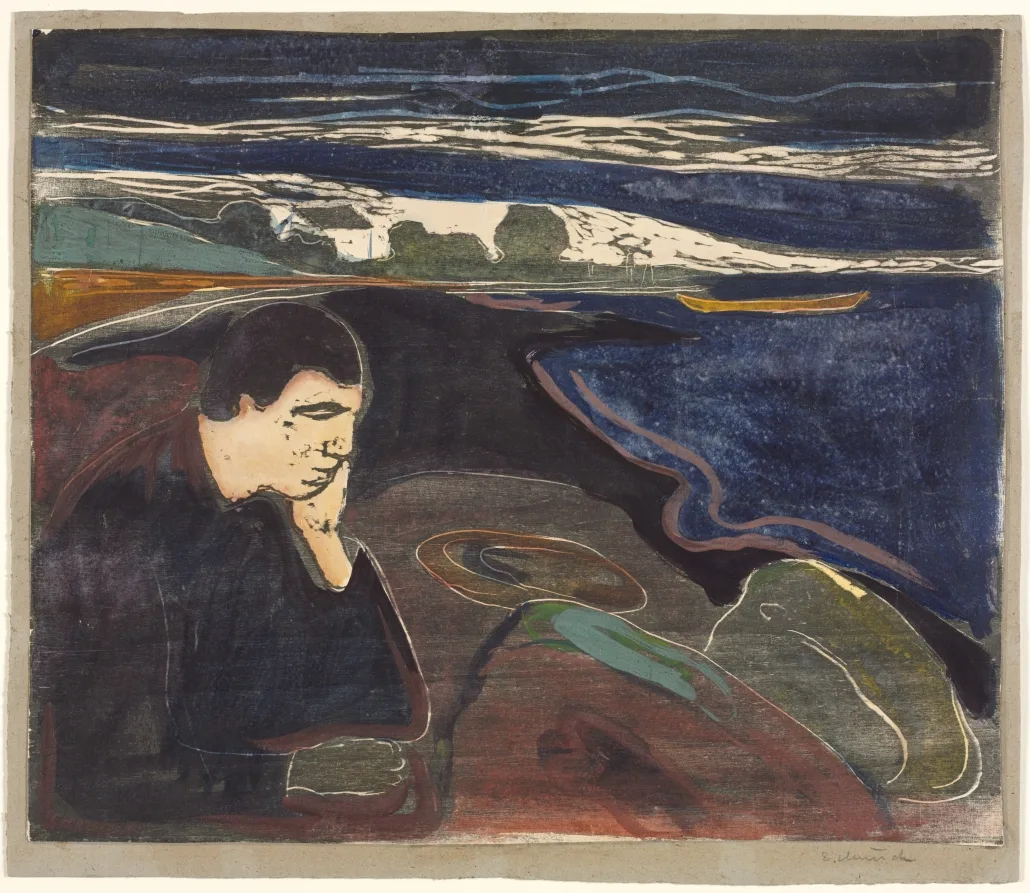
I do not paint what I see, but what I saw.
Edvard Munch, painter
Munch is the bridge figure, older than the German painters and read by all of them. His line about painting from memory rather than observation describes the whole tradition better than any manifesto the movement produced.
