

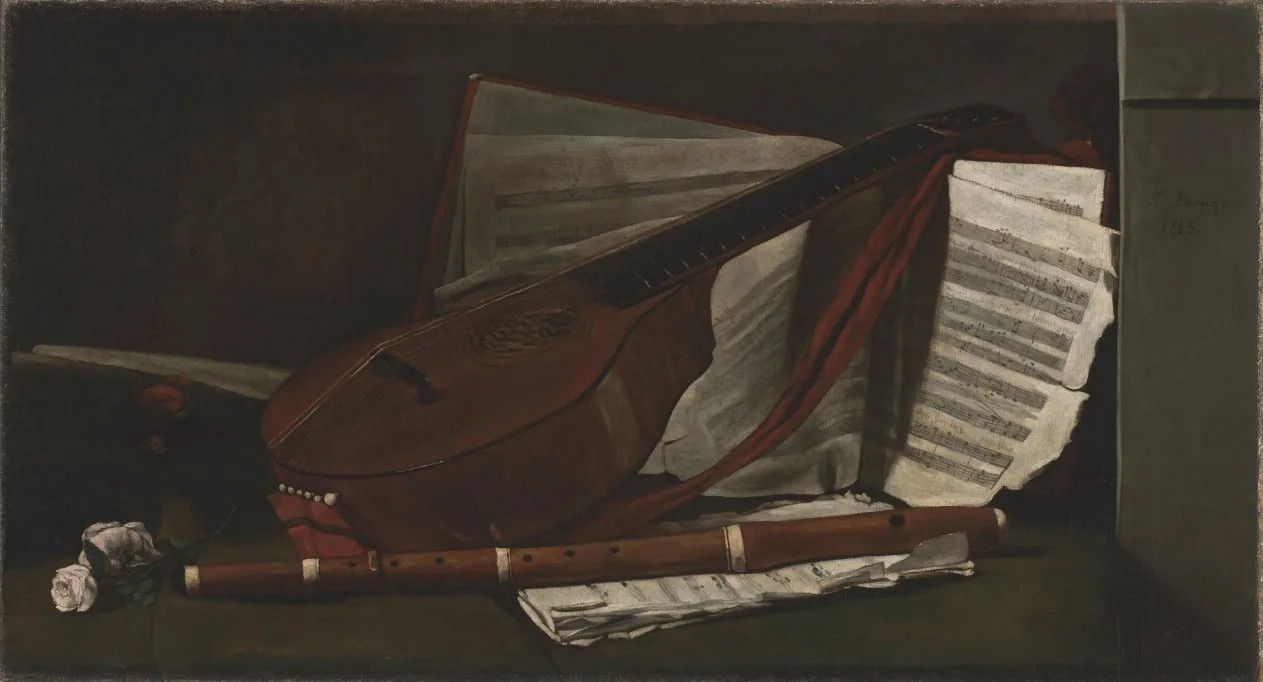
Still life is the genre where painters go to solve problems, which is why it carries more distinct styles than its subject matter suggests. Nothing in it moves, nothing has an opinion about how it is depicted, and the painter controls every variable in the room. That freedom is what makes the choices visible.
The genre also sat at the bottom of the academic hierarchy for three centuries, below history painting, portraiture and landscape. Painters kept working in it anyway, partly because it sold to households that had no use for a battle scene. The low status is exactly why so much technical experiment of the period happened here.
The main traditions
Dutch still life of the seventeenth century set the template and still supplies the vocabulary. It divides into the sober monochrome banketje, the loaded pronkstilleven built to display wealth, and the vanitas with its skulls and guttering candles. All three are about time, and the objects are chosen to show it passing.
The French line that runs through Chardin and into Bonvin and Ribot rejected the display. The objects are cheap, the arrangement looks accidental, and the paint handling carries the interest instead. This is the tradition most contemporary still life painters work in, whether or not they can name it.
Spanish bodegon went in a harder direction and deserves separate mention. Sanchez Cotan hung quinces and cabbages on strings inside a black stone niche and lit them like relics, and the result has almost nothing in common with a Dutch table. Painters who find the Dutch version too comfortable usually end up here.
Cezanne broke the genre open by treating the arrangement as a construction problem rather than a description. The table tips forward, the plates refuse to agree on a single viewpoint, and the fruit is there because it holds still. Everything abstract painting did with structure over the following forty years started on those tables.
- Banketje: limited palette, few objects, a laid table caught partway through a meal
- Pronkstilleven: silver, lobster and imported fruit, arranged to be counted as much as seen
- Vanitas: skull, snuffed candle and watch, all of it pointing at the same short argument
- Chardin line: humble objects, matte surfaces, the paint doing work the props do not
- Photorealist still life: glass, chrome and packaging, resolved past what a lens can hold
The photorealist entry on that list is the one selling hardest right now. Reflective surfaces give the technique somewhere to perform, and buyers who would never hang a bowl of fruit will hang a canvas of sweet wrappers rendered at four times life size. Whether that holds through the decade is an open question.
Prices in the genre split along the same lines as the styles. Seventeenth century Dutch work with a firm attribution sits in the auction market and moves with it, while contemporary still life is priced by the artist and barely moves at all. The middle, meaning nineteenth century French and American work by second rank names, is where value has been sitting quietly for years.
Reading a still life before you buy
Check the shadows first, since they are where invented arrangements come apart. Objects assembled from separate photographs cast light in directions that do not agree, and the error is obvious once you look for it. Then check the least important object in the picture, because that is where a painter working on autopilot gives themselves away.
Condition deserves more attention here than in other genres. Dark grounds in the seventeenth century tradition have often been overcleaned, which leaves the shadows thin and the objects floating in front of nothing. Hold a raking light across the surface and study the darkest passages, since that is where restoration shows first.
Painting from nature is not copying the object; it is realizing one's sensations.
Paul Cezanne, painter
Cezanne said that late in his life, by which point he had spent decades painting the same apples on the same table. The sentence describes what separates a still life that holds attention from an exercise in rendering. The objects are a pretext, and every good painter in the genre knows it.
